

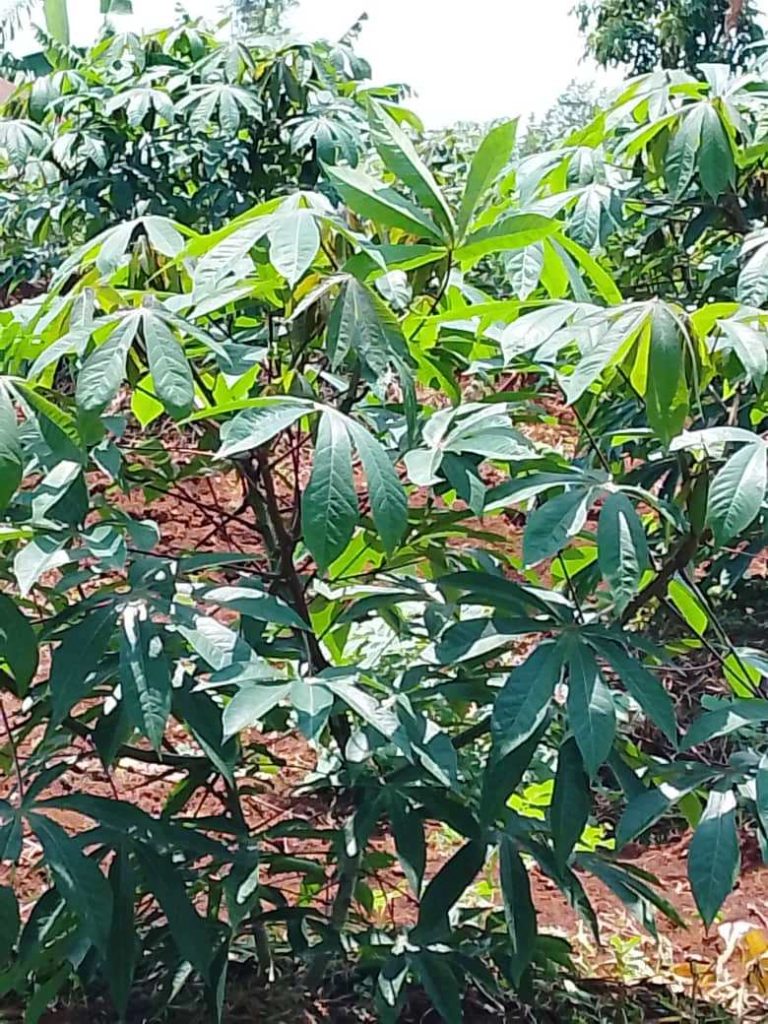
Kayonza District, Rwanda – The Kayonza District administration is encouraging farmers to adopt Zai Pit technology as an innovative approach to increasing cassava productivity, making better use of farmland, and strengthening household food security amid climate-related challenges.
The technology is being promoted through the SCORE Rwanda Project, funded by the Global Agriculture and Food Security Program (GAFSP) and supervised by the International Fund for Agricultural Development (IFAD), with implementation by the Ingabo Farmers’ Association.
According to the Director of Agriculture in Kayonza District, Zai Pit technology offers farmers an opportunity to improve crop production without necessarily requiring large areas of land. Its promotion is particularly important in semi-arid areas, where climate variability can affect agricultural production and household livelihoods.
Zai Pit: Making Every Piece of Land Count
The Director of Agriculture emphasized that Zai Pit technology has the potential to increase cassava yields while promoting efficient land use, including intercropping where appropriate. Cassava is a valuable food security crop because of its ability to tolerate periods of limited rainfall and its importance as a source of food for rural households.
The Director noted that even farmers with small plots of land can benefit from the technology. According to the District’s agricultural extension message, planting just 10 cassava cuttings using improved practices could help provide food for a household for more than six months, depending on growing conditions, crop management, and household needs.
This approach presents an opportunity for households to make productive use of small gardens and available farmland while diversifying their food sources and improving their resilience to climate-related challenges.
Strengthening Household Food Security and Reducing Post-Harvest Losses
Beyond increasing production, cassava offers important advantages for household food security. Unlike highly perishable crops, cassava roots can remain in the soil until needed, subject to crop maturity, pest and disease risks, and other field conditions. This flexibility can help households manage their food supply and harvest according to their needs.
The Director of Agriculture observed that households with access to cassava can strengthen their food security, particularly when production is supported by appropriate farming practices and effective post-harvest management.
However, farmers are encouraged to plan for the handling, processing, storage, and marketing of surplus production to minimize losses and make the most of their harvests.
Through the SCORE Rwanda Project, the promotion of Zai Pit technology is expected to contribute to improved cassava productivity and more resilient cassava-based livelihoods. The District anticipates better production outcomes as more farmers learn about and adopt the technology, although results will depend on implementation, soil conditions, planting materials, and crop management.
The Director of Agriculture highlighted the importance of strengthening community mobilization, increasing the number of demonstration plots, and expanding agricultural extension services to help farmers understand and apply the technology.
One proposed approach is to establish demonstration plots in every village, allowing farmers to observe the technology in practice and learn from the results. The District also sees an opportunity to strengthen the role of village-level agricultural advisors in providing practical guidance and connecting farmers with reliable sources of planting materials.
The availability of healthy, suitable cassava cuttings will be essential to expanding adoption. Greater coordination among farmers, agricultural extension workers, the District, and development partners can help address this challenge and improve farmers’ access to planting materials.
From Demonstration to Adoption: The District’s Way Forward
To encourage more farmers to embrace Zai Pit technology, the Kayonza District administration plans to strengthen awareness campaigns and promote peer-to-peer learning through farmer study visits and exchanges.
The Director also emphasized the importance of showcasing the technology at District and provincial agricultural exhibitions, as well as integrating awareness messages into community meetings and other local mobilization activities.
Another proposed approach is to establish demonstration gardens at public institutions and local administrative offices. Such visible examples would allow farmers to see how the technology is applied and appreciate its potential benefits firsthand.
As the Director emphasized, “Seeing is believing.” Demonstration plots can help turn agricultural information into practical knowledge, build farmers’ confidence, and encourage wider adoption of improved farming practices.
The District’s message is clear: farmers should remain open to innovative approaches that can improve productivity, make efficient use of land, and strengthen household food security.
SCORE Rwanda: Building Resilient Cassava-Based Livelihoods
Through the SCORE Rwanda Project, the Ingabo Farmers’ Association is working to strengthen smallholder farmers’ resilience to food insecurity and climate-related challenges by promoting improved cassava farming practices, including Zai Pit technology.
The collaboration with local authorities and agricultural stakeholders is important for extending knowledge to farming communities, demonstrating improved techniques, and identifying practical solutions to adoption barriers.
As Kayonza District seeks to expand the uptake of Zai Pit technology, increasing access to healthy planting materials, strengthening agricultural extension services, and establishing demonstration plots closer to farmers will be essential priorities.
By putting innovation into practice, making every piece of land count, and empowering farmers with practical knowledge, Kayonza District is advancing efforts to improve cassava productivity, strengthen climate resilience, and build more food-secure households in Rwanda.

Leave a Comment (0)