

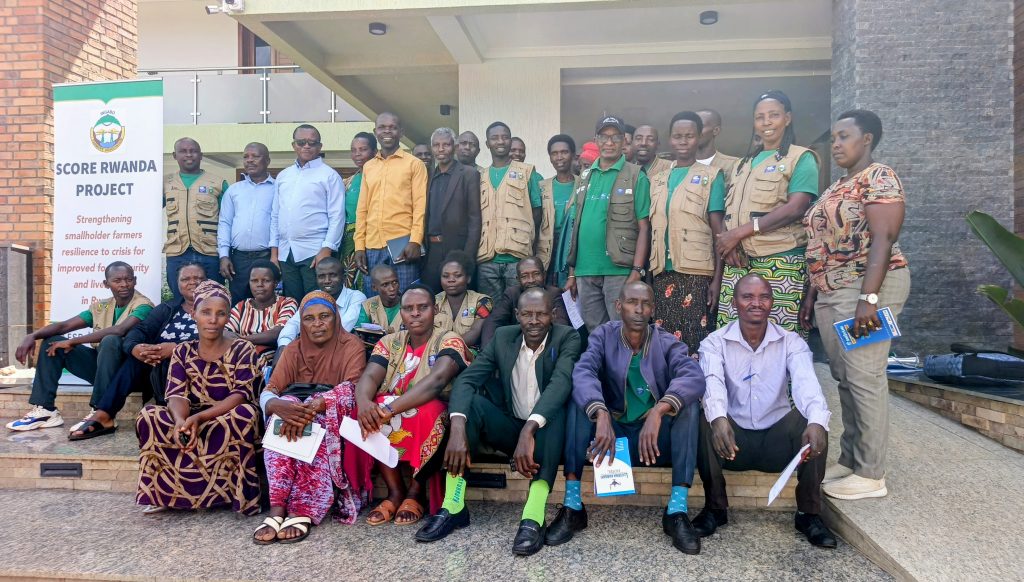
Gatsibo District, Rwanda – 8 October 2026
The Ingabo Farmers’ Association continues to strengthen cooperative leadership and promote climate-resilient agricultural practices through the SCORE Rwanda Project, bringing together cooperative presidents and Farmer Field School Facilitators to discuss progress, achievements, and strategies for improving agricultural productivity and food security.
Following consultative meetings held in the Southern Province with presidents of cooperatives working with the project, a similar meeting took place on 8 October 2026 at Hotel Ntende in Gatsibo District, Eastern Province.
During the meeting, participants expressed their appreciation for the support provided by the Global Agriculture and Food Security Program (GAFSP) through the SCORE Rwanda Project. They reaffirmed their commitment to strengthening cooperative activities, improving the quantity and quality of cassava planting materials, and promoting innovative farming practices to increase productivity.
A key priority highlighted during the discussions was the promotion of Zai Pit technology, an innovative cassava farming technique aimed at improving crop productivity and helping farmers adapt to climate-related challenges. Wider adoption of this technology is expected to contribute to increased cassava production, stronger farmer resilience, and improved food security.
The meeting also provided an opportunity for cooperative leaders to reaffirm their commitment to working together to improve agricultural practices, strengthen their cooperatives, and support farmers in achieving better production outcomes.
Through the SCORE Rwanda Project, funded by GAFSP and supervised by the International Fund for Agricultural Development (IFAD), the Ingabo Farmers’ Association works with smallholder farmers to strengthen the resilience of cassava-based livelihoods and improve food security in Rwanda.
By promoting collaboration among cooperative leaders, improving access to quality planting materials, and encouraging the adoption of innovative technologies such as Zai Pit, the project continues to support efforts to build more productive, resilient, and sustainable farming communities.

Leave a Comment (0)