

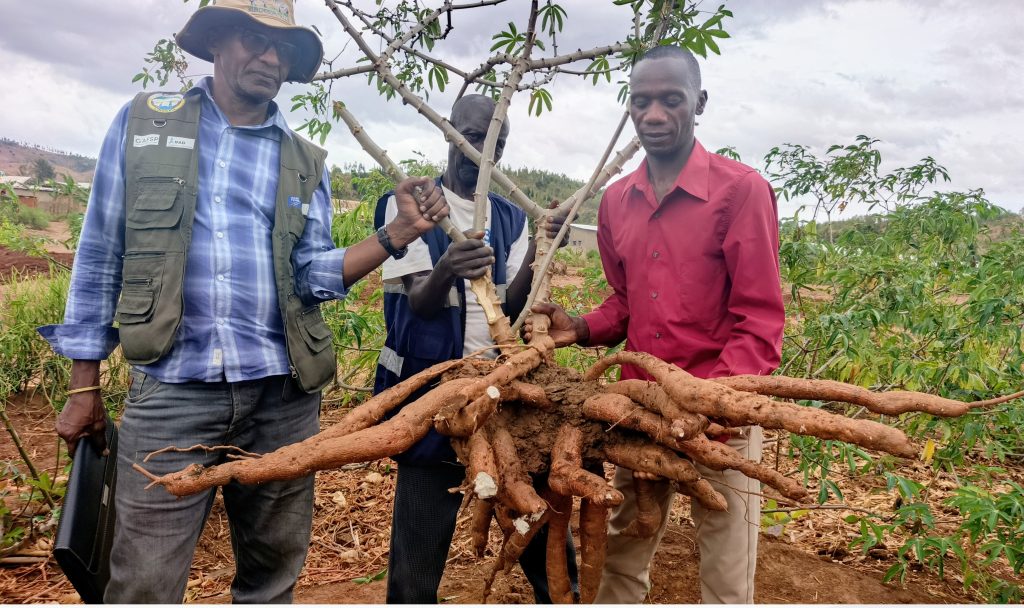
“Cassava is wealth.” With this message, Mr. Sylvestre Ntagasanzwe, President of KOPUAIM Cooperative, highlighted the economic potential of cassava farming and the importance of increasing production to improve farmers’ livelihoods and strengthen food security in Rwanda.
He made the remarks following a meeting that brought together presidents of cooperatives and Farmer Field Scholl Facilitators working with the Ingabo Farmers’ Association through SCORE Rwanda Project; a meeting that took place at Ntende Hotel in Gatsibo District on 8 October 2026.
During the meeting, Mr. Ntagasanzwe reaffirmed his commitment, alongside fellow cooperative leaders, to intensifying efforts to increase cassava production in both quantity and quality. He emphasized the importance of adopting a market-oriented approach to farming, ensuring that production responds to market demand and creates better economic opportunities for farmers.
“Our ambition is to increase cassava production and quality while strengthening market-oriented farming, with the goal of transforming the Eastern Province a major cassava production hub,” he noted.
Achieving this ambition will require stronger cooperation among farmers, improved agricultural practices, access to quality planting materials, and the adoption of innovative technologies that can enhance productivity and resilience to climate-related challenges.
Through the SCORE Rwanda Project, the Ingabo Farmers’ Association supports smallholder farmers in strengthening the resilience of cassava-based livelihoods, improving agricultural productivity, and enhancing food security.
By empowering cooperatives and promoting improved cassava farming practices, the project contributes to positioning cassava as not only a staple food crop but also a valuable source of income and economic growth for farming communities.
For farmers in the Eastern Province, cassava represents more than food; it is an opportunity to build resilient livelihoods, create wealth, and contribute to a stronger agricultural economy.

Leave a Comment (0)